

Senegal Chimp Project
Protecting Senegal’s Endangered Chimpanzees

Community-led conservation at the edge of extinction
In the dry, rugged landscapes of southeastern Senegal, a critically endangered subspecies of chimpanzee is fighting for survival. With fewer than 2,700 Western chimpanzees (Pan troglodytes verus) left in the country, time is running out.
These remarkable great apes, our closest living relatives, not only share over 98% of our DNA, but also display fascinating cultural behaviours found nowhere else in the world: spear-hunting, cave-dwelling, and unique tool use passed from generation to generation.
Through our partnership with Jane Goodall Institute Spain and local teams in Kédougou, Senegal and northern Guinea, we are committed to protecting these chimpanzees and the fragile ecosystems they call home - using Dr Jane Goodall’s Tacare approach, which places equal value on people, wildlife, and the environment.
Our Approach
Our work in Senegal is rooted in collaboration, sustainability, and long-term community benefit. Together with local communities, we support:
🧠 Conservation research to understand and protect wild chimpanzee populations
🌳 Reforestation and forest nurseries to rebuild degraded landscapes
🍽️ Agroforestry and food security programmes for more resilient farming
📚 Environmental education for youth and local schools
🔥 Climate resilience initiatives, including firebreaks, wells, and live fences
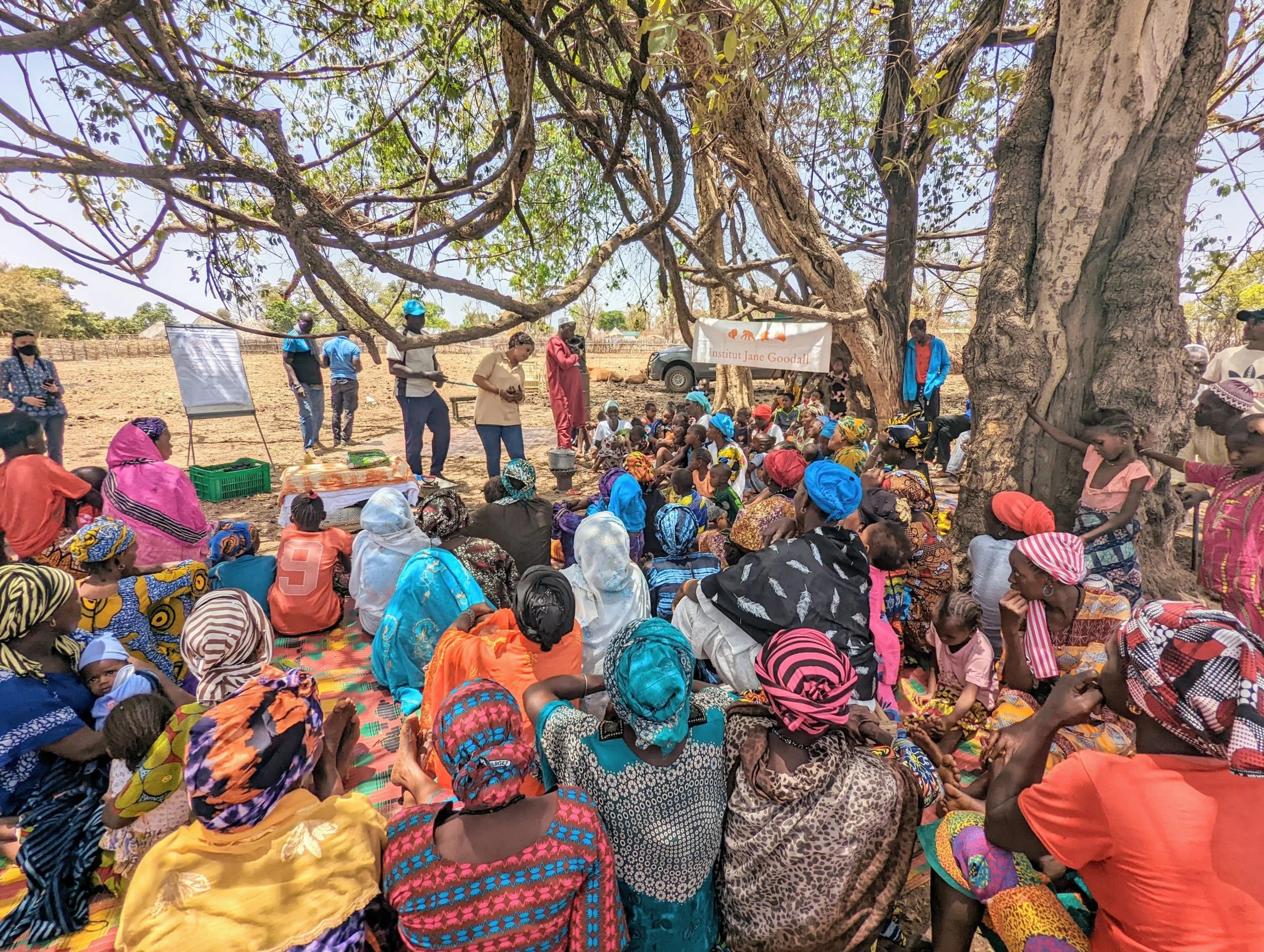
💪 Women-led livelihoods, including biocharcoal production and fonio farming
Why It Matters
Chimpanzees in Senegal face intense pressure from habitat destruction, wildfires, and unsustainable land use. But conservation cannot succeed without meeting the needs of the people who share that land.
That’s why our work goes beyond species protection. We’re restoring landscapes, building climate resilience, supporting education, and creating jobs, particularly for women and marginalised groups, so conservation benefits both nature and the communities who depend on it.
Some highlights so far:
🌾 1,000+ women trained and supported to grow fonio, a climate-resilient native grain
🍊 Fruit trees and food plants distributed to reduce human–wildlife conflict
🪵 Biocharcoal made from straw introduced to reduce pressure on forests
🔥 Firebreaks and ‘live fences’ built to prevent deforestation and protect crops naturally


Help Us Protect the Last Wild Chimps of Senegal
Your support powers community-led conservation that works—for chimps, forests, and future generations.
“Only when we understand, can we care. Only when we care, will we help. Only when we help, shall they be saved.”
– Dr Jane Goodall